
Introduction: Welcome to the Future of City Living
Your phone can show the fastest route to avoid traffic. Buses arrive just when you need them, and traffic lights change at the right time. It may sound like magic, but this is Data Science making Smart Cities work smarter!
Today’s cities are getting smarter, and it’s all thanks to artificial intelligence and data science working behind the scenes. These technologies are changing how we travel, making our daily commutes faster, safer, and much less stressful. Let’s explore this exciting transformation in simple, everyday language.
What Exactly Is Data Science in Smart Cities?
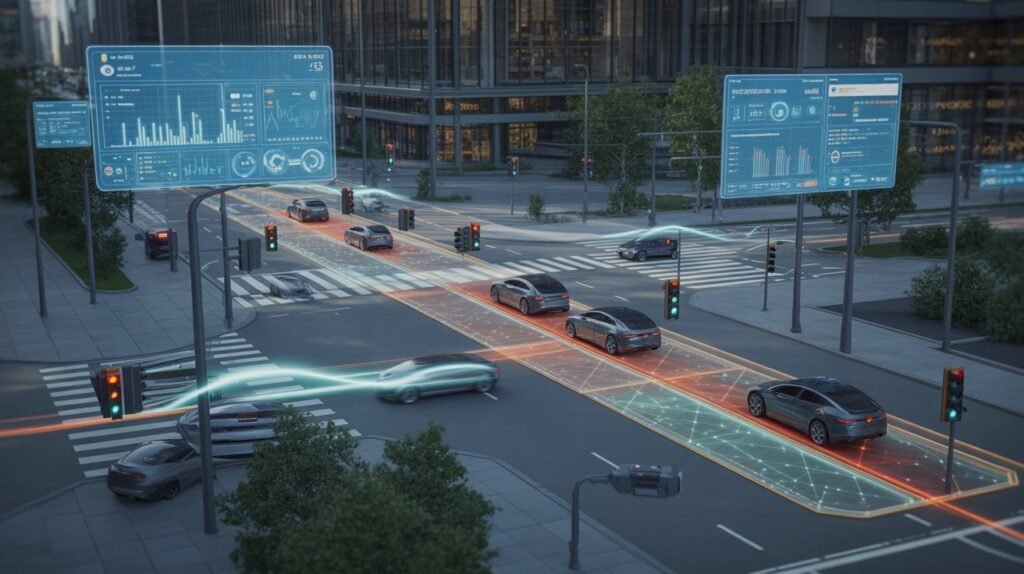
Think of data science as a super-smart assistant that collects information, spots patterns, and makes predictions. In smart cities, this assistant is constantly watching and learning from everything happening on the roads.
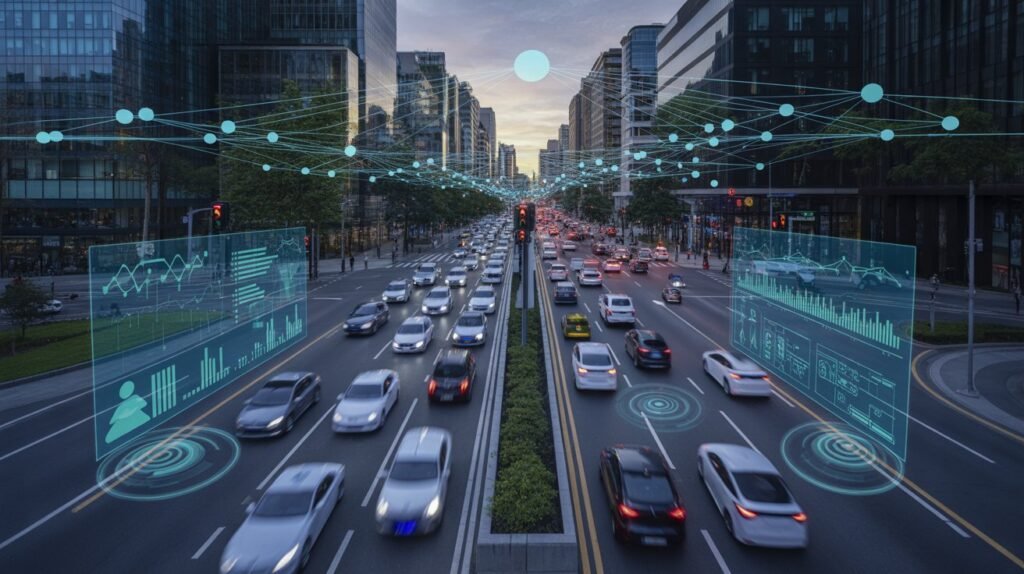
Here’s what happens: Sensors, cameras, and smartphones collect millions of pieces of information every second. This includes how many cars are on which street, how fast buses are moving, where people are walking, and much more. Data science then analyzes all this information to help cities run smoothly.
It’s like having thousands of helpers observing your city 24/7, then using their observations to make intelligent decisions about traffic and transport.
How AI Is Transforming Traffic Management
Smart Traffic Lights That Actually Think
Remember sitting at a red light with no cars coming from the other direction? Those days are disappearing fast!
Modern traffic lights use AI to see what’s happening in real-time. They count vehicles, detect pedestrians, and even recognize emergency vehicles. Based on this information, they adjust their timing automatically.
Predicting Traffic Jams Before They Happen
AI doesn’t just react to traffic problems, it predicts them before they occur. By analyzing historical data and current conditions, these systems can forecast congestion hours in advance.
Think of it like a weather forecast, but for traffic. You wouldn’t leave home without checking the weather, and soon you won’t leave without checking your AI traffic advisor.
How it helps you:
- Plan your departure time to avoid rush hours
- Choose alternate routes before roads get crowded
- Save fuel by avoiding stop-and-go traffic
- Reduce stress from unexpected delays
Revolutionary Changes in Public Transportation
Buses and Trains That Know Your Schedule
Public transport is getting a major upgrade thanks to Data Science in Smart Cities. AI systems now predict exactly how many people will need buses or trains at different times.
In Singapore, smart buses adjust their frequency based on passenger demand. During peak hours, more buses hit the road automatically. During quiet times, the system reduces frequency to save energy and costs.
Real-Time Updates You Can Trust
Gone are the days of guessing when your bus will arrive. Smart transport apps now provide accurate, minute-by-minute updates by analyzing GPS data, traffic conditions, and historical patterns.
What this means for you:
- No more waiting in the cold wondering when your bus will come
- Better planning for your daily schedule
- Reduced crowding because passengers are distributed better
- More reliable connections between different transport modes
Making Roads Safer for Everyone
Safety is where AI truly shines. Data science helps identify dangerous intersections, predict accident-prone areas, and even alert drivers to potential hazards.
Smart Detection Systems
Cameras equipped with AI can spot dangerous situations instantly:
- Vehicles driving the wrong way
- Pedestrians stepping into traffic unexpectedly
- Stopped vehicles in dangerous locations
- Drivers running red lights
When detected, these systems immediately alert traffic controllers or even the drivers themselves.
Learning from Accidents
Every accident provides data that helps prevent future ones. AI analyzes accident reports, weather conditions, road layouts, and timing to identify patterns. Cities then use these insights to improve road design, adjust speed limits, or add warning signs.
Reducing Pollution and Saving Energy
Here’s something amazing: better traffic management means cleaner air for everyone.
When traffic flows smoothly without constant stopping and starting, vehicles burn less fuel and produce fewer emissions. AI systems optimize traffic flow specifically to reduce environmental impact.
Recent trend: Many cities now use “green wave” systems where traffic lights coordinate to keep vehicles moving at steady, fuel-efficient speeds. Barcelona reduced emissions by 20% in some areas using this approach.
Encouraging Eco-Friendly Transport
Data science also helps promote greener transport options. Smart city apps show you:
- The carbon footprint of different route options
- Available bikes or scooters nearby
- Public transport connections that save time and pollution
- Walking routes that are safe and pleasant
Parking Made Simple (Finally!)
Finding parking is one of the most frustrating parts of city driving. You circle blocks, waste fuel, and arrive late and stressed.
Smart parking systems solve this problem beautifully. Sensors in parking spots detect when spaces become available. This information feeds into apps that guide you directly to open spots.
Benefits you’ll notice:
- Find parking in minutes, not hours
- Reduce traffic caused by cars searching for spots
- Pay automatically without fumbling for coins
- Reserve spots in advance for important appointments
Cities like San Francisco and London already have extensive smart parking networks, and the technology is spreading rapidly.
Self-Driving Vehicles: The Next Big Step
While fully autonomous cars aren’t everywhere yet, they’re coming faster than you might think. These vehicles use advanced data science to navigate roads safely.
Self-driving cars continuously collect and analyze data about their surroundings: other vehicles, pedestrians, road conditions, weather, and traffic signals. They make thousands of decisions per second, often faster and more consistently than human drivers.
What to expect in the near future:
- Shared autonomous taxis that are cheaper than owning a car
- Reduced accidents (90% of accidents are caused by human error)
- Better mobility for elderly people and those who can’t drive
- More efficient use of roads as AI vehicles coordinate with each other
Latest Trends in Smart City Transportation
Digital Twins for Traffic Planning
Cities are now creating virtual copies of themselves called “digital twins”. These digital models test different traffic solutions before implementing them in real life. It’s like a video game version of your city where planners can experiment risk-free.
AI-Powered Micro Mobility
Electric scooters and bikes are becoming smarter. AI helps companies place them where they’re needed most and predicts demand patterns. Some systems even route you through safer, less congested streets.
Integrated Mobility Platforms
New apps combine all transport options in one place: buses, trains, bikes, scooters, taxis, and ride-sharing. AI suggests the fastest, cheapest, or greenest combination for your specific journey.
Practical Tips: How to Benefit From Smart City Tech Today
You don’t need to wait for the future – here’s how to take advantage of smart city technology right now:
Download the right apps: Look for official transport apps in your city. Many offer real-time updates, journey planning, and multimodal options.
Enable traffic updates: Use navigation apps like Google Maps or Waze that incorporate real-time traffic data and suggest alternate routes.
Try different transport modes: Smart city apps often reveal faster options you hadn’t considered, like combining a bike ride with a train journey.
Provide feedback: Many smart city systems improve based on user reports. Report problems, and you’re helping the AI learn.
Check before you travel: Spend 30 seconds checking traffic conditions before leaving. This simple habit can save significant time.
Use off-peak hours when possible: AI systems often show you exactly when roads are clearest. Adjust your schedule slightly to avoid the worst congestion.
Challenges and What’s Being Done
Of course, implementing Data Science in Smart Cities isn’t without challenges:
Privacy concerns: Cameras and sensors collect a lot of information. Cities are addressing this by anonymizing data and establishing clear privacy guidelines.
Technology costs: Smart systems require investment, but cities are finding that long-term savings and benefits outweigh initial expenses.
Digital divide: Not everyone has smartphones or internet access. Cities are ensuring alternative options remain available for all residents.
Cybersecurity: Protecting these systems from hacking is crucial. Advanced security measures are constantly being developed and updated.
The Road Ahead: What’s Coming Next
The future of urban transportation looks incredibly exciting:
Flying taxis: Yes, really! Several cities are testing aerial vehicles for short urban trips, reducing road congestion.
Underground hyperloops: High-speed underground transport systems could connect cities at incredible speeds.
Vehicle-to-everything communication: Cars, roads, traffic lights, and pedestrians’ phones will all communicate with each other, creating a coordinated transport ecosystem.
Predictive maintenance: AI will detect problems with roads, bridges, and vehicles before they fail, making transport safer and more reliable.
Personalized mobility: Transportation systems will learn your habits and preferences, suggesting options tailored specifically to you.
Conclusion: A Smoother Journey Ahead
Data Science in Smart Cities is transforming how we move around urban areas. From traffic lights that think to buses that predict demand, from safer roads to cleaner air, AI is making transportation better in countless ways.
The best part? This revolution is just beginning. As technology advances and more cities adopt these solutions, our daily travels will become faster, safer, more convenient, and more environmentally friendly.
You’re living through an exciting transition. The frustrations of traffic jams, missed buses, and wasted time searching for parking are gradually becoming problems of the past. Smart cities powered by data science and AI are creating a future where transportation works for everyone.
So next time you check your phone for traffic updates or catch a bus that arrives exactly on time, remember: you’re experiencing the magic of data science making cities smarter, one journey at a time.
The future of urban transportation isn’t just coming – it’s already here, and it’s getting better every day!