
The role of a Data Scientist has transformed dramatically over the past few years. With artificial intelligence becoming more powerful and accessible, professionals in this field now work differently than they did just a couple of years ago. If you’re studying data science or planning to become a Data Scientist, understanding these changes will help you prepare for a successful career.
This blog explores how AI is reshaping what Data Scientists do, the new skills they need, and why this evolution makes the profession more exciting than ever.
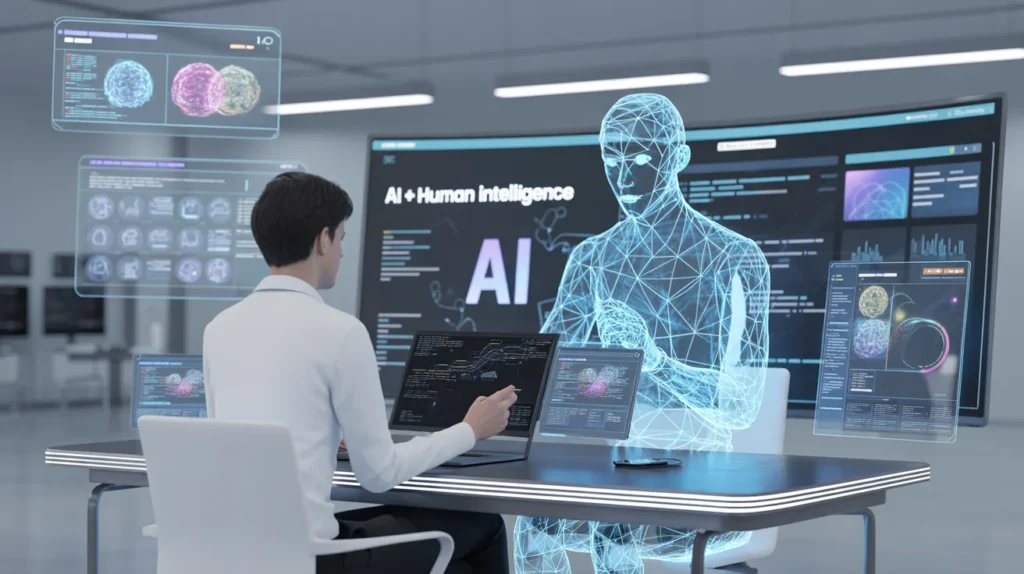
What Does a Data Scientist Do Today?
A Data Scientist analyzes complex information to help organizations make better decisions. They work with massive datasets, build predictive models, and turn raw numbers into actionable insights that drive business strategy.
In 2026, the core mission remains the same. However, the tools, techniques, and daily responsibilities have evolved significantly. AI tools now handle many routine tasks that previously consumed hours of a Data Scientist’s time. This shift allows professionals to focus on higher-level strategic thinking and problem-solving.
The Evolution: From Manual Analysis to AI-Assisted Intelligence
Before AI Integration
Previously, Data Scientists spent considerable time on:
- Cleaning and preparing datasets manually
- Writing code from scratch for basic statistical analysis
- Testing multiple algorithms to find the best fit
- Creating visualizations one chart at a time
- Debugging code for hours
After AI Integration
Today’s Data Scientists leverage AI tools that:
- Automatically detect and fix data quality issues
- Suggest optimal algorithms based on the problem type
- Generate initial code templates and models
- Create comprehensive visualizations with simple prompts
- Identify errors and recommend solutions instantly
This evolution doesn’t replace Data Scientists. Instead, it amplifies their capabilities and allows them to deliver results faster and more accurately.
How AI Tools Are Transforming Daily Workflows
The way Data Scientists work every day has changed a lot because of AI tools. Tasks that used to take hours or even days can now be completed in just a few minutes. For example, cleaning and organizing data was one of the biggest time-consuming jobs for Data Scientists. Today, AI tools can automatically find errors, fill in missing information, and prepare data without much manual effort. Writing code has also become easier because AI assistants can generate code based on simple instructions, saving a huge amount of time.
When it comes to choosing the right model for a prediction, AI systems can now test multiple options at the same time and suggest the best one. Even creating charts and reports has become simpler as AI tools can automatically design clear and attractive visuals. All these changes do not mean that Data Scientists are no longer needed. Instead, these tools free up their time so they can focus on more important tasks like solving complex problems, making smart decisions, and turning data into meaningful insights that help businesses grow.
New Skills Data Scientists Need in 2026
The integration of AI into data science workflows has shifted the skill requirements for professionals in this field.
Critical Thinking and Business Strategy
With AI handling routine technical tasks, Data Scientists now spend more time on:
- Understanding business problems deeply
- Asking the right questions before building models
- Interpreting results in business context
- Communicating insights to non-technical stakeholders
AI Tool Proficiency
Data Scientists must know how to:
- Work with AI-powered platforms and tools
- Validate AI-generated outputs
- Customize automated solutions for specific needs
- Understand when to use AI assistance and when to code manually
Domain Expertise
Understanding your industry is now very important. A Data Scientist in finance needs different knowledge than someone working in healthcare or manufacturing. This specialization helps you :
- Choose the right data and features for prediction
- Notice unrealistic or incorrect patterns that AI may not catch
- Build solutions that follow industry rules and regulations
- Communicate clearly with subject experts and professionals
Ethical AI and Responsible Analytics
As AI systems make more decisions, Data Scientists must ensure these systems are:
- Fair and unbiased across different groups
- Transparent in how they reach conclusions
- Compliant with privacy regulations
- Secure against potential misuse
How AI Enhances Data Analysis Capabilities

Faster Insight Generation
AI tools process information at speeds humans cannot match. They can:
- Analyze millions of records in seconds
- Identify patterns across multiple dimensions simultaneously
- Test hundreds of hypotheses quickly
- Generate comprehensive reports automatically
This speed allows Data Scientists to explore more possibilities and deliver insights when they’re most valuable.
Improved Accuracy in Predictive Modeling
Modern AI systems help Data Scientists build more accurate models by:
- Detecting subtle patterns in complex data
- Combining multiple data sources effectively
- Updating models automatically as new data arrives
- Reducing human errors in calculations
Enhanced Data Visualization
AI-powered visualization tools now:
- Suggest the most effective chart types for your data
- Create interactive dashboards automatically
- Highlight the most important trends and outliers
- Generate presentation-ready graphics
Data Scientists customize these visualizations to tell compelling stories with data.
The Collaborative Relationship Between AI and Data Scientists
AI and Data Scientists work best when they work together. Think of AI as a smart assistant that handles repetitive and time-consuming tasks while the Data Scientist takes care of the bigger picture. For example, AI can process large amounts of data and find patterns quickly, but it is the Data Scientist who decides what those patterns mean and how they can help the business.
A Data Scientist brings important things to the table that AI simply cannot do, such as creative thinking, understanding of business goals, and the ability to ask the right questions. AI on the other hand is great at speed, accuracy, and handling large amounts of information at the same time. When both work together, the results are much better than what either could achieve alone.
This partnership also means that Data Scientists must trust AI tools while still checking their outputs carefully. By understanding what AI can and cannot do, Data Scientists can use it in the smartest way possible. This collaborative relationship is not going anywhere. It will only grow stronger in the coming years, making the work of Data Scientists more productive, meaningful, and impactful than ever before.
Practical Applications in Different Industries
Healthcare and Medical Research
Data Scientists use AI tools to:
- Analyze patient outcomes across thousands of cases
- Predict disease progression with greater accuracy
- Identify effective treatment combinations
- Optimize hospital resource allocation
The Data Scientist ensures these models respect patient privacy, account for demographic variations, and integrate with existing medical knowledge.
Financial Services and Business Intelligence
In finance, Data Scientists leverage AI for:
- Real-time fraud detection
- Credit risk assessment
- Investment strategy optimization
- Customer behavior analysis
They validate these automated systems, ensure regulatory compliance, and translate findings into actionable business strategies.
E-commerce and Marketing
Online retailers employ Data Scientists who use AI to:
- Personalize product recommendations
- Optimize pricing strategies
- Predict inventory needs
- Analyze customer sentiment from reviews
The human expertise focuses on understanding customer psychology, testing strategies, and balancing automation with human touch.
Preparing for an AI-Enhanced Data Science Career
Education and Learning Path
If you’re studying to become a Data Scientist, focus on:
- Strong foundations in statistics and mathematics
- Programming skills in Python and R
- Understanding of machine learning concepts
- Experience with AI tools and platforms
- Communication and presentation skills
- Industry-specific knowledge
Hands-On Practice
Build projects that combine AI tools with traditional data science methods. This practice helps you:
- Understand what AI can and cannot do
- Learn when to rely on automation
- Develop judgment about validating AI outputs
- Build a portfolio demonstrating practical skills
Continuous Learning
The field evolves rapidly. Successful Data Scientists:
- Stay updated on new AI tools and techniques
- Join professional communities and forums
- Attend workshops and conferences
- Experiment with emerging technologies
- Share knowledge with peers
The Future Outlook for Data Scientists
The future looks bright and full of opportunities for Data Scientists. As more companies rely on data to make important decisions, the need for skilled professionals in this field will only increase. AI will continue to handle routine tasks, but Data Scientists will remain essential because they bring creativity, critical thinking, and human judgment to the table. In the coming years, Data Scientists will work more closely with AI systems, using them as powerful tools to solve bigger and more complex problems. Industries like healthcare, finance, education, and technology will all need Data Scientists who can understand both the technical side and the bigger business picture. Simply put, learning data science today sets you up for a strong and rewarding career tomorrow.

Conclusion
AI is not replacing Data Scientists. Instead, it is helping them become more strategic, efficient, and impactful in their work. A Data Scientist in 2026 combines technical skills with business understanding and uses AI tools as helpful assistants to solve complex problems that need human thinking and creativity. For students entering this field, the key is to treat AI as a partner. Learn how these tools work, understand their limitations, and build the uniquely human skills that automation cannot replace. The role of a Data Scientist has never been more exciting. Whether you are analyzing healthcare data, optimizing business operations, or uncovering insights that drive important decisions, your journey in this field promises continuous learning, meaningful impact, and endless possibilities.