
Imagine having a magic crystal ball that gives you a peek into the future! Time series forecasting works similarly, it analyzes past patterns to predict what might happen next. From forecasting tomorrow’s weather and estimating how many toys a store will sell next month to predicting stock prices, time series forecasting is incredibly useful.
In this blog, we’ll break down what time series forecasting is, explore popular techniques for making predictions, and look at how various industries apply it every day. And don’t worry, we’ll keep it simple and fun.

What is Time Series Forecasting?
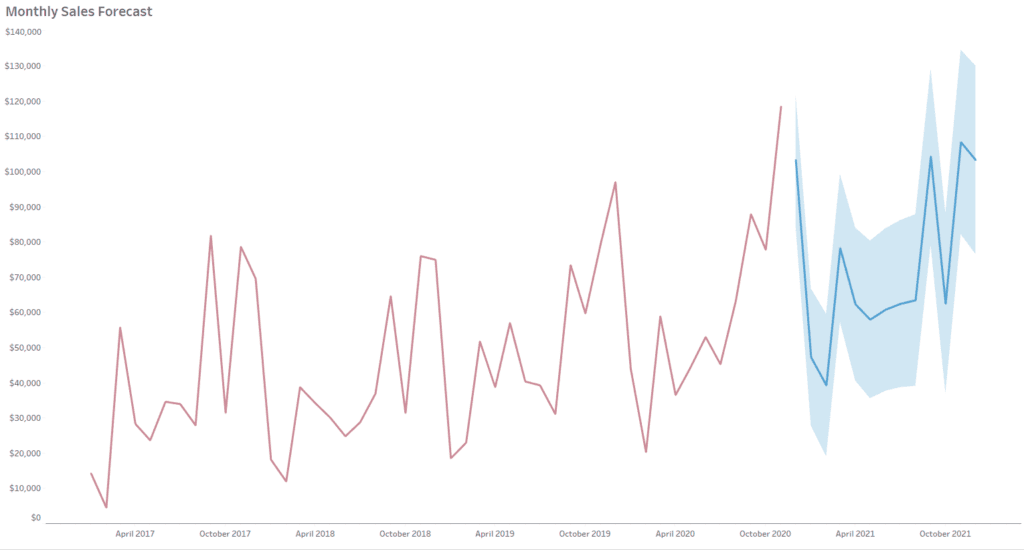
A time series is a sequence of data points recorded at regular intervals, such as daily temperatures, monthly sales, or annual school attendance. Forecasting involves making informed predictions about what will happen in the future based on past data. Therefore, time series forecasting uses historical data collected over time to anticipate future values. It’s about identifying trends and patterns to make informed predictions about what’s to come.
Why is Time Series Forecasting Important?
- Helps businesses plan the quantity of products to manufacture.
- Helps weather stations predict rain or sunshine.
- Helps farmers decide the best time to plant crops.
- Helps stock markets guess price changes.
- Helps traffic controllers manage busy roads.
Popular Techniques in Time Series Forecasting
Scientists and experts use different methods to forecast time series data. Let’s explore a few common methods with easy-to-understand explanations.
1. Moving Averages
Think of moving averages like a smooth roller coaster ride instead of a bumpy one. It helps by averaging several past data points to flatten sudden jumps and give a clearer picture of the general direction.
- Imagine you want to know the average temperature for the last 5 days and use that to guess tomorrow’s temperature.
- It smooths out random ups and downs.
Why use it?
- Easy to understand and calculate.
- Works well when data changes slowly.
2. ARIMA (AutoRegressive Integrated Moving Average)
ARIMA sounds complicated, but it’s just a way to mix different ideas to make a forecast:
- AutoRegressive (AR): Uses past values to predict the next one.
- Integrated (I): Works on data that may have trends or changes over time.
- Moving Average (MA): Looks at past errors to improve predictions.
Think of ARIMA as: A recipe that mixes past observations, trends, and errors to bake a tasty prediction.
Why use it?
- Works with many types of time series data.
- Good for data that changes steadily or has seasonal effects.
3. Machine Learning Methods
Machine learning means teaching computers to find patterns all by themselves. For time series forecasting, computers can learn from lots of data and give smart predictions.
- Uses algorithms like decision trees or neural networks.
- Can handle complex patterns that simple methods might miss.
- Learn from past failures to improve forecasts.
Why use it?
- Great for big and complicated data.
- Can discover hidden relationships.
Real-World Use Cases of Time Series Forecasting
Time series forecasting isn’t just for scientists—lots of industries depend on it!
Finance
- Predicting stock market prices.
- Estimating future sales or revenues.
- Managing risk by forecasting credit scores.
Retail
- Planning inventory so stores don’t run out of popular items.
- Estimating customer demand during holidays.
- Deciding when to offer discounts or sales.
Weather Prediction
- Forecasting temperatures, rain, or storms.
- Planning for natural disasters like hurricanes.
- Helping farmers decide the best time for planting.
Transportation and Traffic
- Predicting busy traffic times to reduce jams.
- Planning bus or train schedules.
- Optimizing delivery routes for faster shipping.
Healthcare
- Forecasting disease outbreaks.
- Planning hospital staff based on patient flow.
- Tracking patient vitals in real time.
Conclusion
Time series forecasting helps us understand patterns in data over time and make predictions. Simple methods like moving averages smooth out data to reveal general trends, while ARIMA models combine past data, trends, and errors to handle seasonal or changing patterns. For more complex problems, machine learning can learn intricate patterns from large datasets. These techniques are widely used in finance for stock predictions, retail for inventory planning, weather forecasting, transportation for route optimization, and healthcare for tracking diseases and planning hospital resources.
Learning time series forecasting is valuable because it turns confusing numbers into clear, actionable insights. It helps make smarter decisions, is applicable in many exciting careers, and combines math, computing, and real-world challenges. With some practice, you can uncover trends, solve meaningful problems, and maybe even predict the next big opportunity, turning data into stories that shape the future.